- +27 11 476 6917
- info@hhk.co.za
- HHK House, Cnr Ruth Crescent & Ethel Avenue, Northcliff Ext 12

Before a single earth electrode goes into the ground or a metre of conductor is laid, you need to know something precise about the site: how well does the soil conduct electricity? It's the most variable factor in earthing system design, and it varies enormously.
It's the most variable factor in earthing system design, and it varies enormously. Bury the same electrode in clay and then in sand, and the resistance values will differ by an order of magnitude.
Design a system without knowing what's underground and you're working blind.
HHK's soil resistivity surveys take the guesswork out of it. We use the Wenner four-pin method, the internationally recognised standard for geoelectric surveying, to measure resistivity at multiple depths and lateral positions across your site. What you get is a complete electrical profile of the ground beneath your feet.
The resistance of an earthing system depends almost entirely on the resistivity of the surrounding soil. The copper conductor itself has negligible resistance. The earth is the resistive element. Understanding it quantitatively isn't optional. It's the foundation of competent design.
Several factors influence soil resistivity:
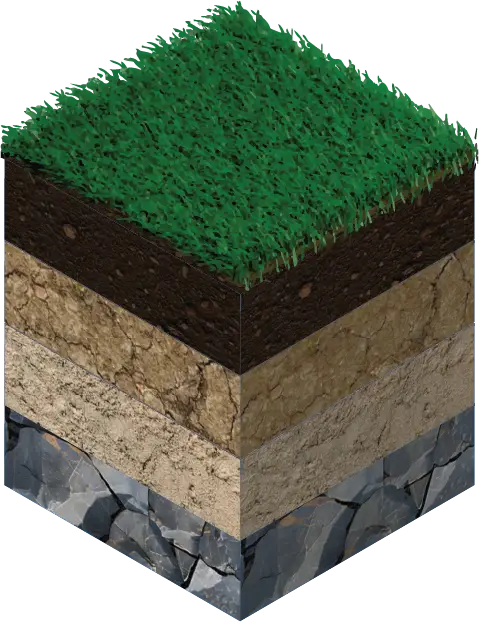
Clay conducts well; sand and rock are highly resistive.
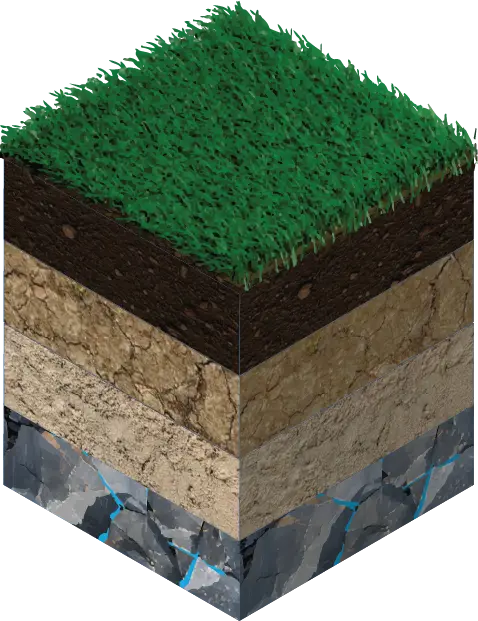
Wet soil can be 100 times more conductive than dry soil.
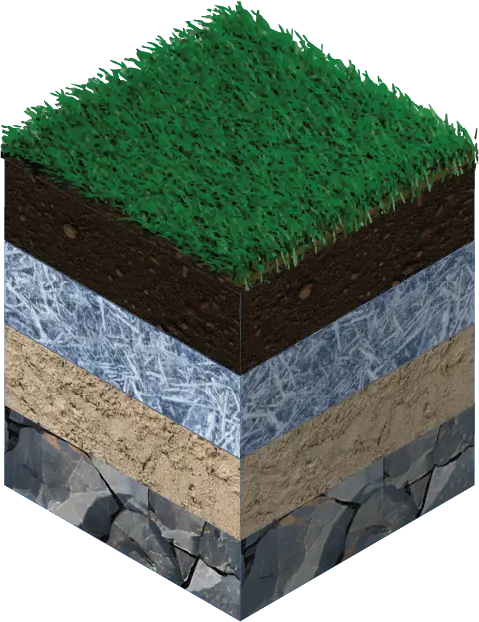
Frozen soil behaves as an insulator,
and seasonal variation can swing resistance dramatically.
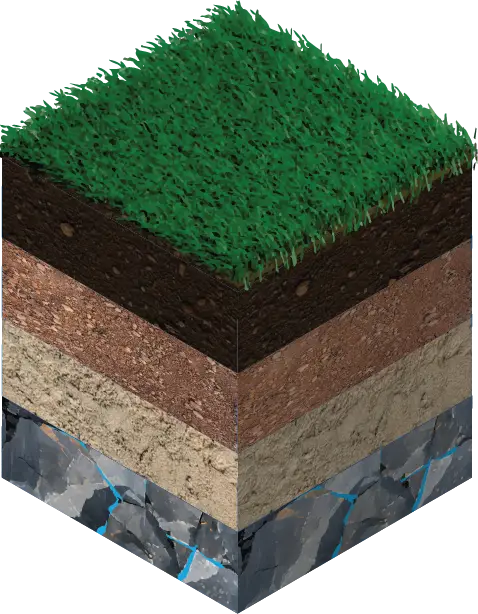
Dissolved salts and minerals affect conductivity.
Loosely packed soil is more resistive than compacted soil.
HHK uses the Wenner method, the standard technique specified in SANS 10199 and IEEE 81. Four electrodes are inserted into the ground in a straight line at equal spacing.
A known current is injected through the two outer electrodes, and the resulting voltage is measured across the two inner electrodes. The ratio of voltage to current, combined with the electrode spacing, yields the apparent soil resistivity at a depth roughly equal to that spacing.
We repeat the measurements at multiple spacings, typically 1 m, 2 m, 4 m, 8 m, and 16 m, to build a vertical profile of resistivity versus depth. Then we move the test array to multiple locations across the site to map horizontal variation as well. What comes out of it is a three-dimensional understanding of your site's electrical characteristics.
Our specialists will assess your site, identify your risk exposure, and design a system that meets SANS standards and stands up to Southern Africa's lightning season.