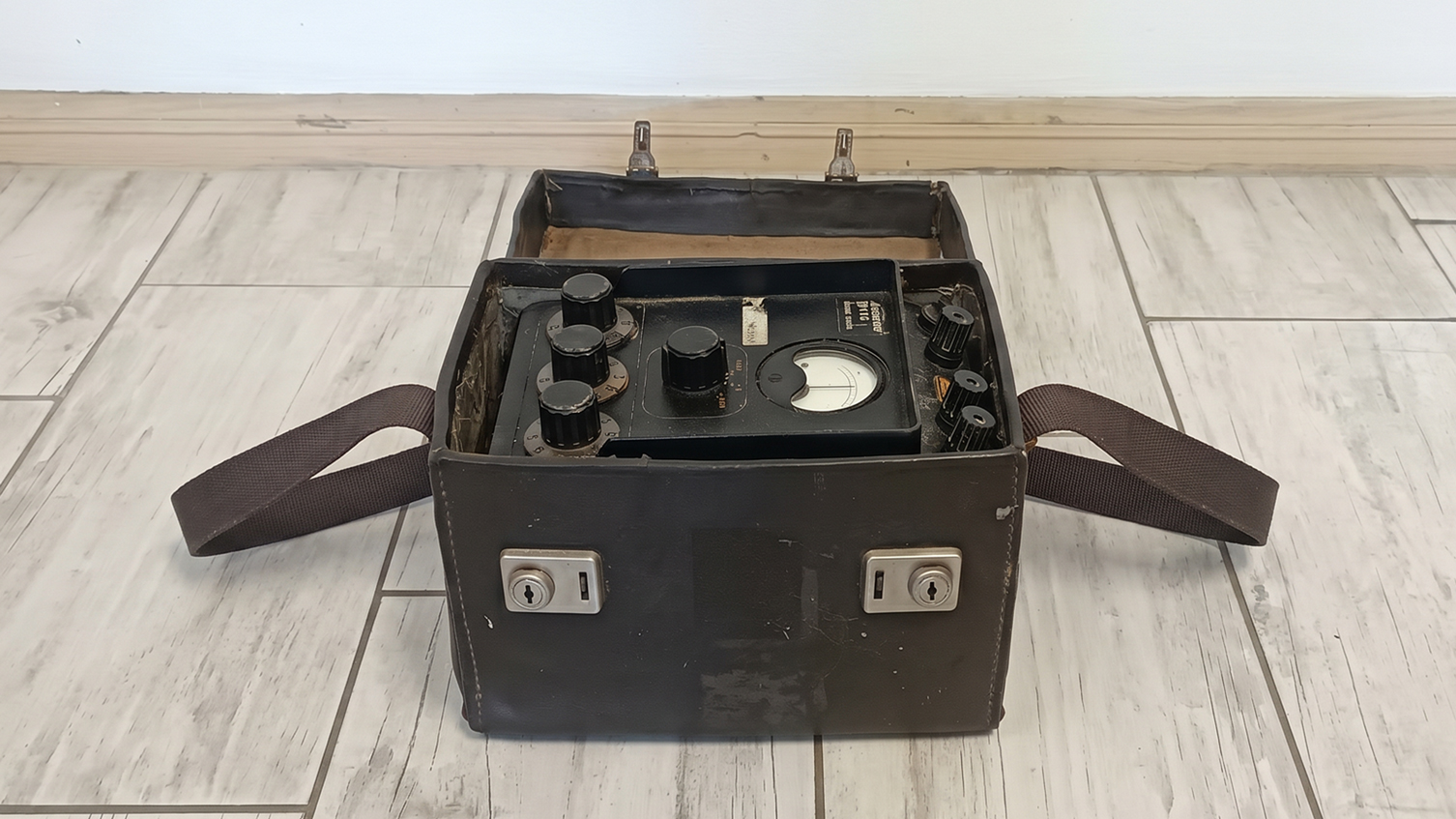
Inside a battered carrying case, tucked away in a drawer no one had opened in years, sat a piece of history.
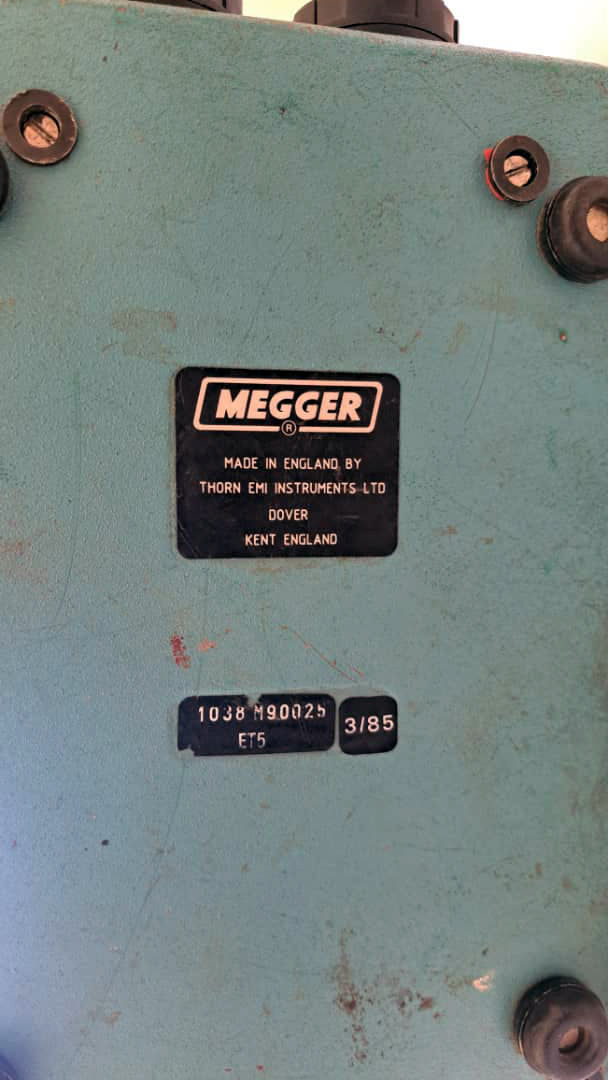
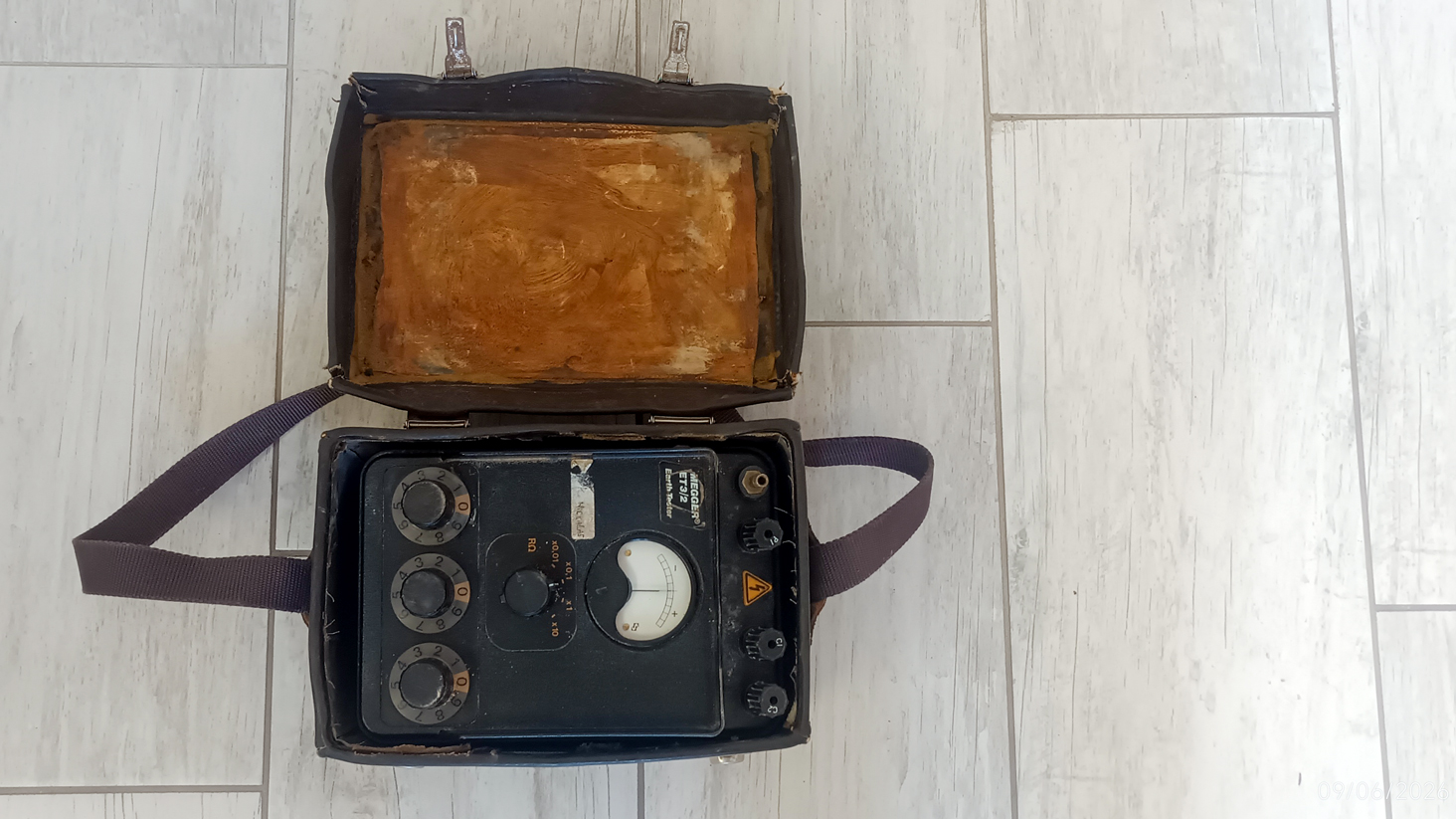
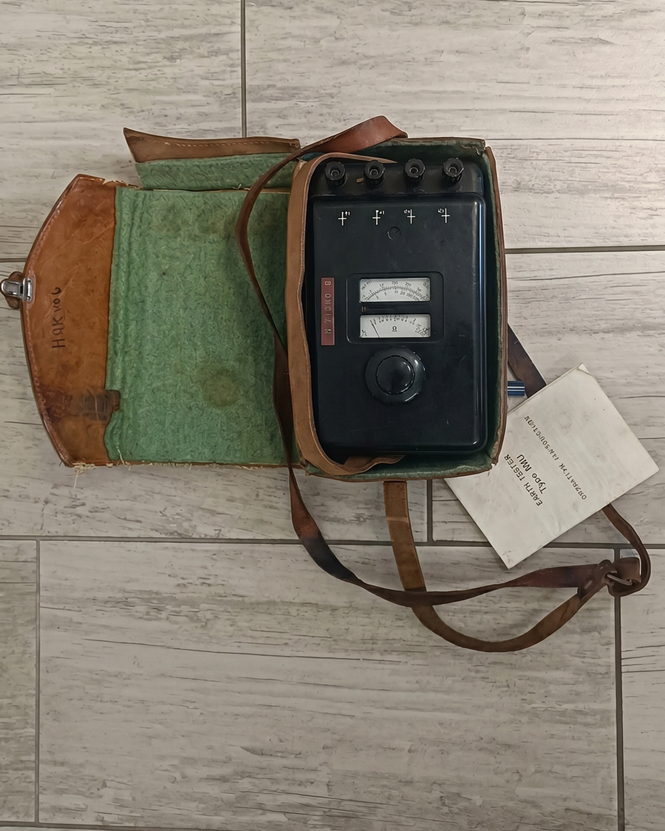
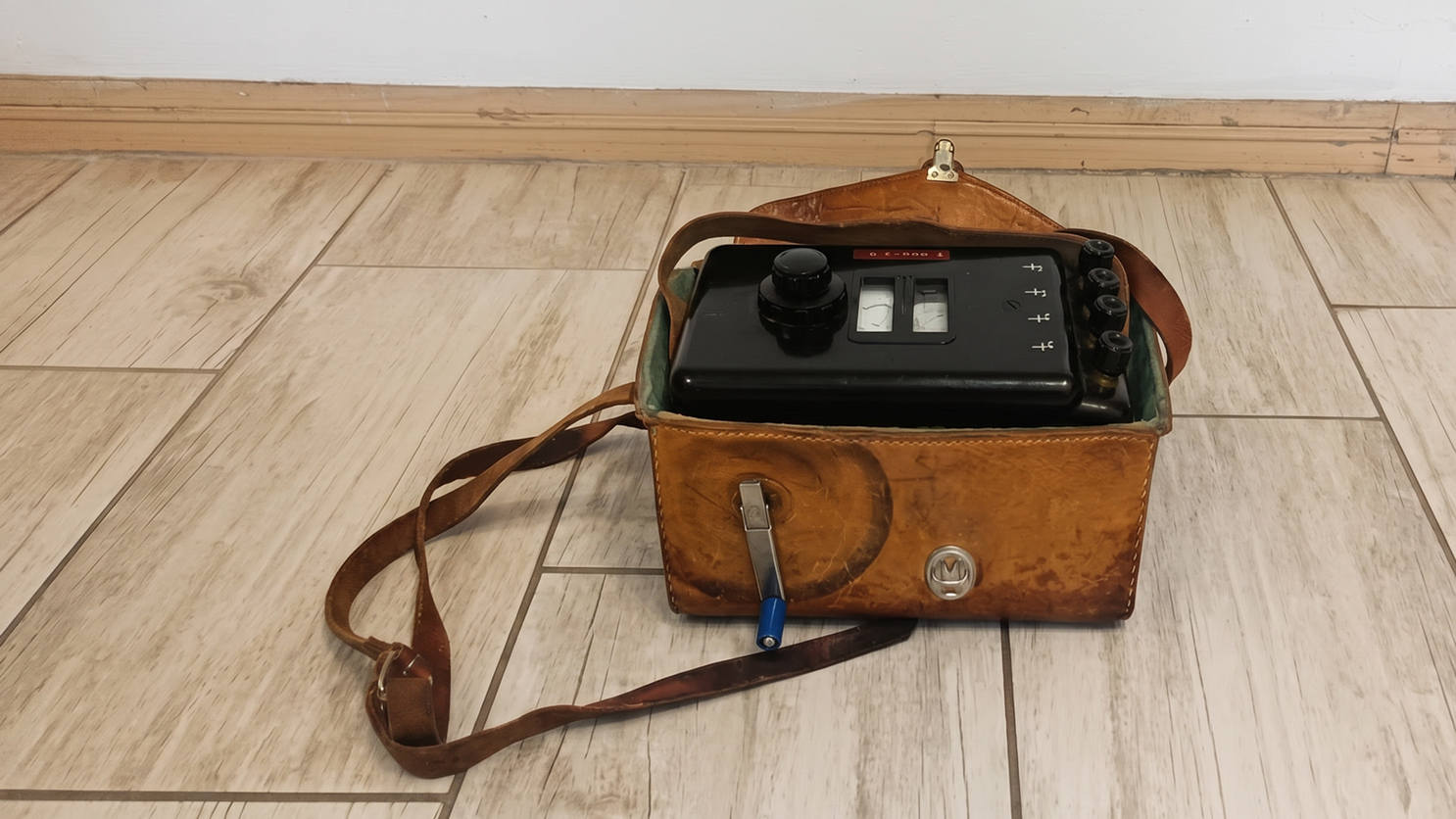
Three years ago, during an office move at HHK headquarters, someone slid open a drawer and found it: a Megger Earth Tester, model ET5, serial number 1038 M90025. Manufactured in March 1985 by Thorn EMI Instruments Ltd in Dover, England. Its green carrying case was worn nearly beyond recognition — scratched, scuffed, and beaten in the way that only decades of real field work can manage. An HHK sticker, faded but holding on, marked it as one of our own.
The instrument inside, though? Spotless.
That detail — worn on the outside, immaculate within — tells you something about the person who carried it.
A Different Kind of Precision
To understand what this instrument is, you have to understand what it does — and more importantly, how.
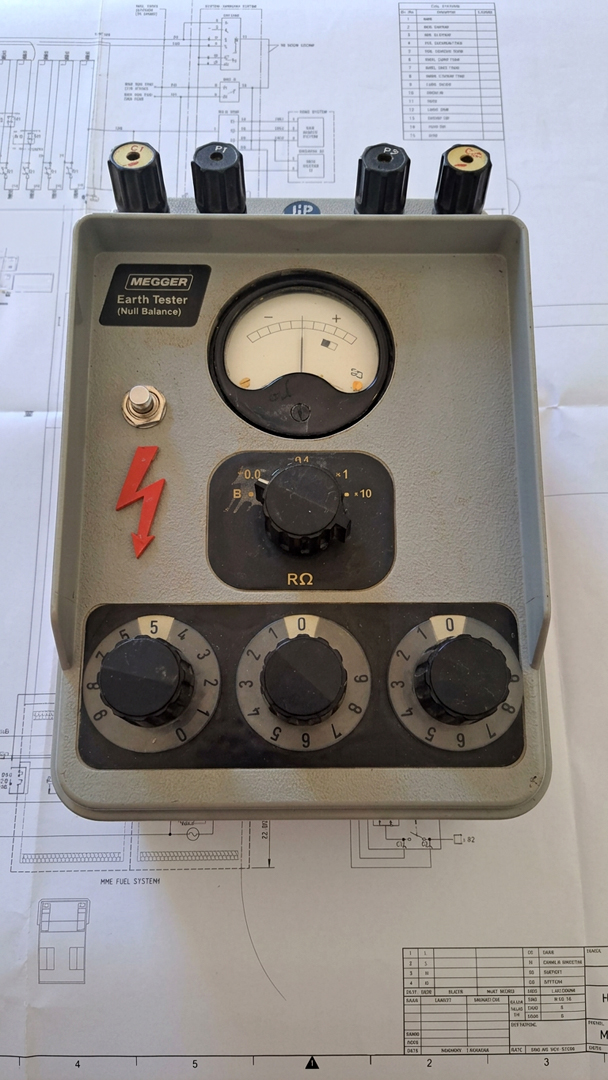
The Megger ET5 uses what is known as the null balance method. There are no digital readouts, no automatic calculations, no shortcuts. The operator adjusts three decade dials by hand, watching a galvanometer needle mounted on the face of the instrument. The goal is to bring that needle to absolute zero — to null. When it reaches null, the resistance reading on the dials is your answer, expressed in ohms.
It is a method that demands patience. It demands a trained eye. It demands someone who understands not just what the number means, but how to coax it from the earth itself.
The world moved on to digital instruments long ago. They are faster, easier, and more than capable of delivering accurate results. But there is something the null balance method carries that digital cannot replicate: the relationship between the operator and the measurement. Every reading was earned. Every result was a conversation between the technician and the ground beneath their feet.
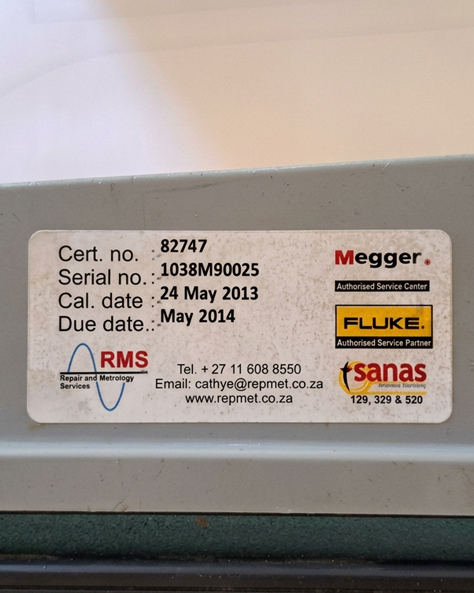
The ET5 was last officially calibrated on 24 May 2013 — verified by an SANAS-accredited laboratory, certificate number 82747. The next calibration was due in May 2014. Someone kept this instrument in service well into the 2010s, long after its peers had been replaced by digital alternatives. That is not negligence. That is trust.
Helmut's Work, In His Hands
There are two of these original Megger testers at HHK's headquarters. Both were used by Helmut Hermann Kanwischer — HHK's founder — and by Nic, one of the longest-serving members of the HHK team, a man who worked alongside Helmut from the earliest days of the company and who, by any fair measure, became part of its foundations as much as any piece of equipment ever did.
Helmut started HHK in 1976 in a garage. He emigrated from Germany with a specialisation, a conviction that what he was doing mattered, and apparently very little regard for the limits other people might have accepted as reasonable. From that garage, he built what is now the largest lightning protection company in Southern Africa — eight branches, more than 100 specialists, projects spanning Namibia, Gauteng, the Northern Cape, and beyond. He served on SANS and IEC industry standards committees. He was a founding member of ELPA, the Earthing and Lightning Protection Association. He shaped the standards that govern how this industry works across a continent.
He carried a Megger tester to do it.
The Chimney on the Left
There is a detail that says more about Helmut than any formal biography could. HHK's first project in Namibia was Van Eck Power Station in Windhoek. A coal plant constructed in the 1970s, it remains Windhoek's primary power supply today — still running, still standing. Still protected. Every time Helmut drove past Van Eck in the years that followed, he would point it out. Not in a general way. He would point specifically to a particular chimney — "the one on the left, not the skew one on the right" — and remind whoever was with him that HHK had been there. That HHK had built something that lasted.
Van Eck Power Station 2024
That kind of pride is not about credit. It is about care. It is the mark of someone who understood that their work had consequences — real, enduring, physical consequences for the people and infrastructure depending on it. A power station is not an abstraction. A lightning strike is not theoretical. Helmut knew this in a way that made everything he built feel personal.
He passed away in 2024.
What the Case Carries
The instrument found in that drawer is now kept at HHK headquarters. It is not in active service, and it will not be calibrated again. But it has not been put behind glass, either. It sits as it was found: in its worn green case, with the HHK sticker still holding on, with the instrument inside still clean.
It is the closest thing to a physical record of where this company began. Before the eight branches. Before the 100 specialists. Before the Husab Mine contract, before the ABSA installations and the MTN data centres and the Eskom sites that now carry HHK Certificates of Compliance. Before all of that, there was a man with a carrying case, a set of decade dials, and the patience to wait for a galvanometer needle to reach zero.
The worn exterior of that case is every difficult site, every job done in heat or rain, every road driven to reach a project on time. The spotless instrument inside is the standard Helmut held himself to — and expected of everyone who worked alongside him.
Carrying It Forward
HHK is nearly 50 years old. The company Helmut built from nothing is now the definitive name in lightning and earthing protection across Southern Africa. It operates under the same SANS and IEC standards Helmut helped write. It holds the same sole focus — not a generalist electrical contractor, not a company that does earthing on the side, but a company that does nothing else and does it with scientific rigour from soil resistivity survey to Certificate of Compliance.
That focus was Helmut's choice. It shaped everything that followed.
The team that carries HHK forward does so knowing the weight of that history. Some of them worked with Helmut directly. Some of them learned from people who did. All of them work within a company whose entire existence is a reflection of one person's conviction that protection — real, engineered, certified protection — matters enough to build a life around.
The Megger ET5 will not take another reading. But the work it represents has never stopped.
Inside a battered carrying case, tucked away in a drawer no one had opened in years, sat a piece of history.
Three years ago, during an office move at HHK headquarters, someone slid open a drawer and found it: a Megger Earth Tester, model ET5, serial number 1038 M90025. Manufactured in March 1985 by Thorn EMI Instruments Ltd in Dover, England. Its green carrying case was worn nearly beyond recognition — scratched, scuffed, and beaten in the way that only decades of real field work can manage. An HHK sticker, faded but holding on, marked it as one of our own.
The instrument inside, though? Spotless.
That detail — worn on the outside, immaculate within — tells you something about the person who carried it.
A Different Kind of Precision
To understand what this instrument is, you have to understand what it does — and more importantly, how.
The Megger ET5 uses what is known as the null balance method. There are no digital readouts, no automatic calculations, no shortcuts. The operator adjusts three decade dials by hand, watching a galvanometer needle mounted on the face of the instrument. The goal is to bring that needle to absolute zero — to null. When it reaches null, the resistance reading on the dials is your answer, expressed in ohms.
It is a method that demands patience. It demands a trained eye. It demands someone who understands not just what the number means, but how to coax it from the earth itself.
The world moved on to digital instruments long ago. They are faster, easier, and more than capable of delivering accurate results. But there is something the null balance method carries that digital cannot replicate: the relationship between the operator and the measurement. Every reading was earned. Every result was a conversation between the technician and the ground beneath their feet.
The ET5 was last officially calibrated on 24 May 2013 — verified by an SANAS-accredited laboratory, certificate number 82747. The next calibration was due in May 2014. Someone kept this instrument in service well into the 2010s, long after its peers had been replaced by digital alternatives. That is not negligence. That is trust.
Helmut's Work, In His Hands
There are two of these original Megger testers at HHK's headquarters. Both were used by Helmut Hermann Kanwischer — HHK's founder — and by Nic, one of the longest-serving members of the HHK team, a man who worked alongside Helmut from the earliest days of the company and who, by any fair measure, became part of its foundations as much as any piece of equipment ever did.
Helmut started HHK in 1976 in a garage. He emigrated from Germany with a specialisation, a conviction that what he was doing mattered, and apparently very little regard for the limits other people might have accepted as reasonable. From that garage, he built what is now the largest lightning protection company in Southern Africa — eight branches, more than 100 specialists, projects spanning Namibia, Gauteng, the Northern Cape, and beyond. He served on SANS and IEC industry standards committees. He was a founding member of ELPA, the Earthing and Lightning Protection Association. He shaped the standards that govern how this industry works across a continent.
He carried a Megger tester to do it.
The Chimney on the Left
There is a detail that says more about Helmut than any formal biography could. HHK's first project in Namibia was Van Eck Power Station in Windhoek. A coal plant constructed in the 1970s, it remains Windhoek's primary power supply today — still running, still standing. Still protected. Every time Helmut drove past Van Eck in the years that followed, he would point it out. Not in a general way. He would point specifically to a particular chimney — "the one on the left, not the skew one on the right" — and remind whoever was with him that HHK had been there. That HHK had built something that lasted.
Van Eck Power Station 2024
That kind of pride is not about credit. It is about care. It is the mark of someone who understood that their work had consequences — real, enduring, physical consequences for the people and infrastructure depending on it. A power station is not an abstraction. A lightning strike is not theoretical. Helmut knew this in a way that made everything he built feel personal.
He passed away in 2024.
What the Case Carries
The instrument found in that drawer is now kept at HHK headquarters. It is not in active service, and it will not be calibrated again. But it has not been put behind glass, either. It sits as it was found: in its worn green case, with the HHK sticker still holding on, with the instrument inside still clean.
It is the closest thing to a physical record of where this company began. Before the eight branches. Before the 100 specialists. Before the Husab Mine contract, before the ABSA installations and the MTN data centres and the Eskom sites that now carry HHK Certificates of Compliance. Before all of that, there was a man with a carrying case, a set of decade dials, and the patience to wait for a galvanometer needle to reach zero.
The worn exterior of that case is every difficult site, every job done in heat or rain, every road driven to reach a project on time. The spotless instrument inside is the standard Helmut held himself to — and expected of everyone who worked alongside him.
Carrying It Forward
HHK is nearly 50 years old. The company Helmut built from nothing is now the definitive name in lightning and earthing protection across Southern Africa. It operates under the same SANS and IEC standards Helmut helped write. It holds the same sole focus — not a generalist electrical contractor, not a company that does earthing on the side, but a company that does nothing else and does it with scientific rigour from soil resistivity survey to Certificate of Compliance.
That focus was Helmut's choice. It shaped everything that followed.
The team that carries HHK forward does so knowing the weight of that history. Some of them worked with Helmut directly. Some of them learned from people who did. All of them work within a company whose entire existence is a reflection of one person's conviction that protection — real, engineered, certified protection — matters enough to build a life around.
The Megger ET5 will not take another reading. But the work it represents has never stopped.