Lightning strikes the earth roughly 8 million times every day. In Southern Africa — one of the most lightning-dense regions on the planet — the threat is not theoretical. It is immediate, recurring, and, for unprotected infrastructure, potentially catastrophic. A single direct strike can incinerate roofing materials, fry electrical systems beyond repair, trigger fires that level entire facilities, and place human lives in mortal danger.
Yet there is a remarkably elegant solution. A well-designed lightning mast does not merely reduce this risk. It eliminates it by intercepting the strike before it ever reaches your building and delivering the current harmlessly into the ground.
At HHK Earthing & Lightning Protection Systems, we have been engineering and installing these critical first lines of defense across Southern Africa for nearly five decades. Here is everything you need to know about how lightning masts work, where they are needed, and why the engineering behind them matters far more than most people realise.
What Lightning Masts Actually Do
A lightning mast is exactly what its name suggests: a tall, conductive structure positioned to be the highest point in a given area. But unpacking how it works reveals a common misconception that even seasoned facility managers sometimes hold.
Lightning masts do not attract lightning. They do not pull strikes toward a building that would otherwise have been left alone. Lightning follows the path of least resistance to ground, and when a stepped leader descends from a storm cloud, it is searching for the easiest connection. A properly positioned mast simply offers a controlled, low-impedance path before the building itself becomes the target. Think of it less as a magnet and more as a preferred exit route — a deliberate, engineered choice presented to a phenomenon that will strike somewhere regardless.
The physics is straightforward. As a thunderstorm builds charge differential between cloud and ground, the electric field intensity around any tall, grounded object increases sharply at its tip. When that field strength exceeds the dielectric breakdown of air (roughly 3 million volts per metre), a streamer launches upward from the mast. If it connects with the downward-moving stepped leader, the strike is captured. From there, the current — often exceeding 30,000 amperes — travels through a dedicated down conductor and dissipates into the earth via a carefully designed earthing system. The building, its occupants, and its equipment never become part of the circuit.
Types of Lightning Masts and Where They Belong
Not all masts are created equal. The right choice depends on building geometry, site conditions, aesthetic requirements, and the specific lightning protection level mandated by the risk assessment.
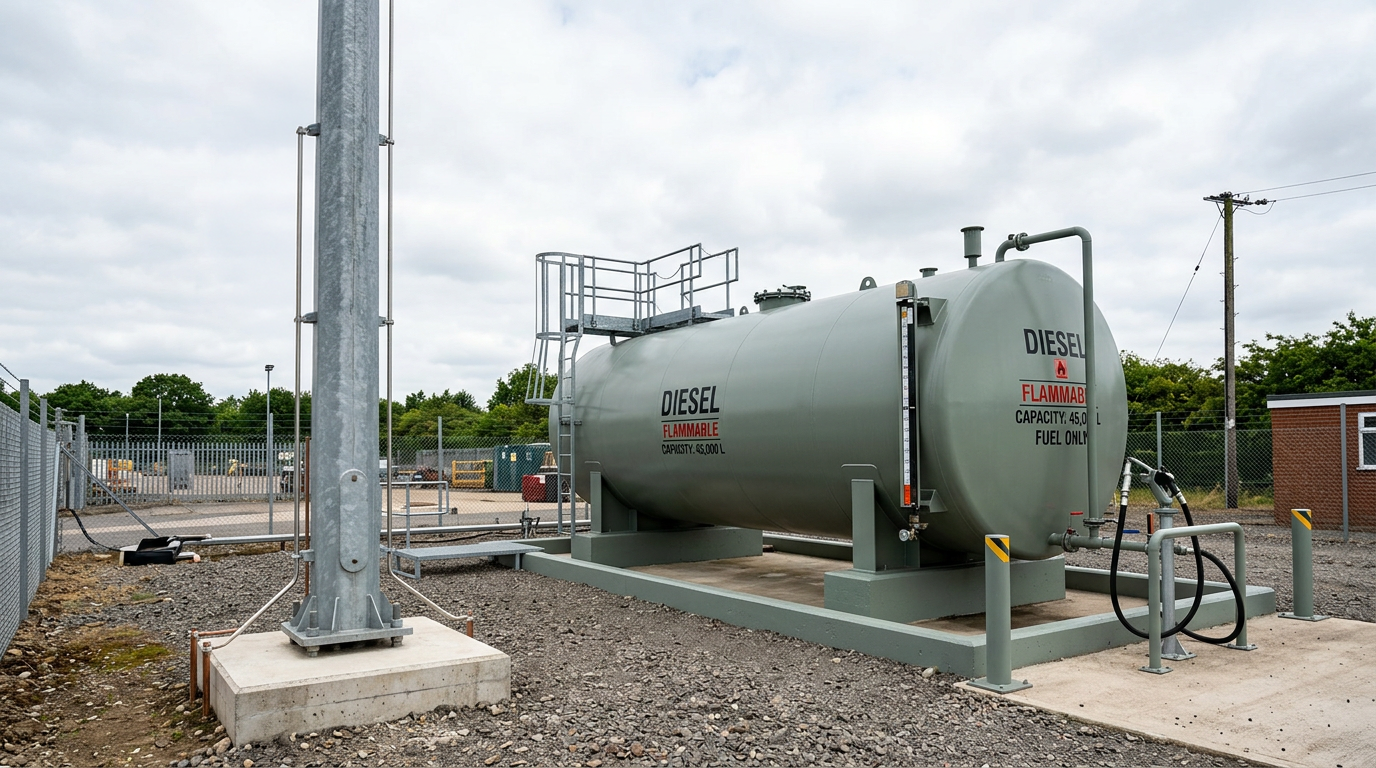
- Free-standing masts are installed independently of the structure they protect, often positioned around the perimeter. They are the preferred solution for fuel depots, explosives storage facilities, and areas where a strike conducted through a building-mounted system would pose unacceptable secondary risks. By keeping the entire lightning current path entirely external, free-standing masts provide the highest degree of separation and safety.
- Building-mounted masts are secured directly to the structure — common on industrial facilities, data centres, and commercial buildings where the building’s structural steel can safely carry the down conductor current. They are cost-effective, space-efficient, and, when engineered correctly, just as safe as their free-standing counterparts.
- Telescopic masts offer adjustable height, making them ideal for temporary installations, sites where future building modifications are planned, or locations requiring height flexibility for maintenance access. They extend and retract mechanically, giving operators control over the protection zone without permanent structural alteration.
- HVI (High-Voltage Insulated) conductors represent a significant technological advance. Unlike traditional bare down conductors that require strict separation distances from the building fabric, HVI conductors are insulated to withstand the full lightning impulse voltage. This allows the mast to be mounted directly on or near sensitive equipment, antennas, or architectural features without requiring separation gaps — a critical advantage on modern buildings where roof space is crowded with HVAC units, solar panels, and communication arrays.
Where Lightning Masts Are Non-Negotiable
Certain environments cannot afford to gamble with lightning risk:
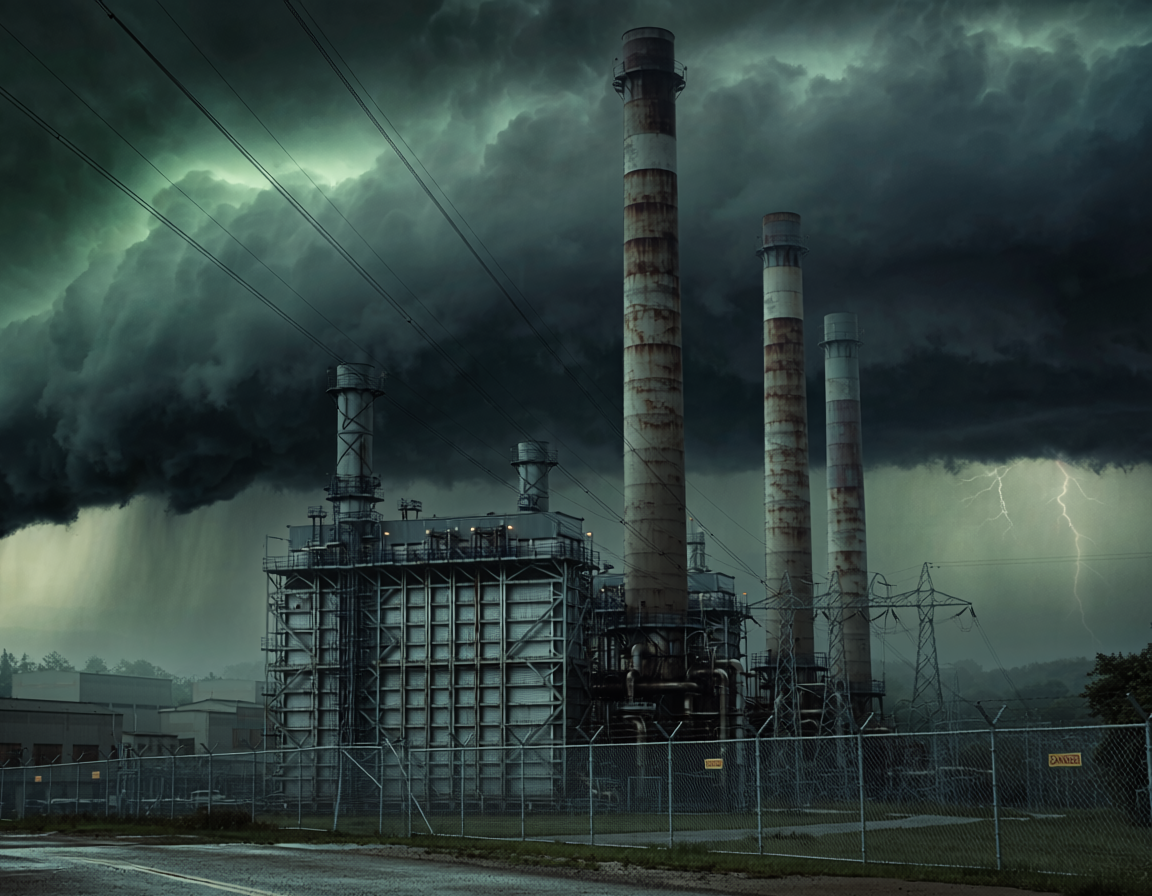
- Industrial facilities and factories — A production line outage caused by a lightning strike can cost millions in lost output, not to mention equipment replacement.
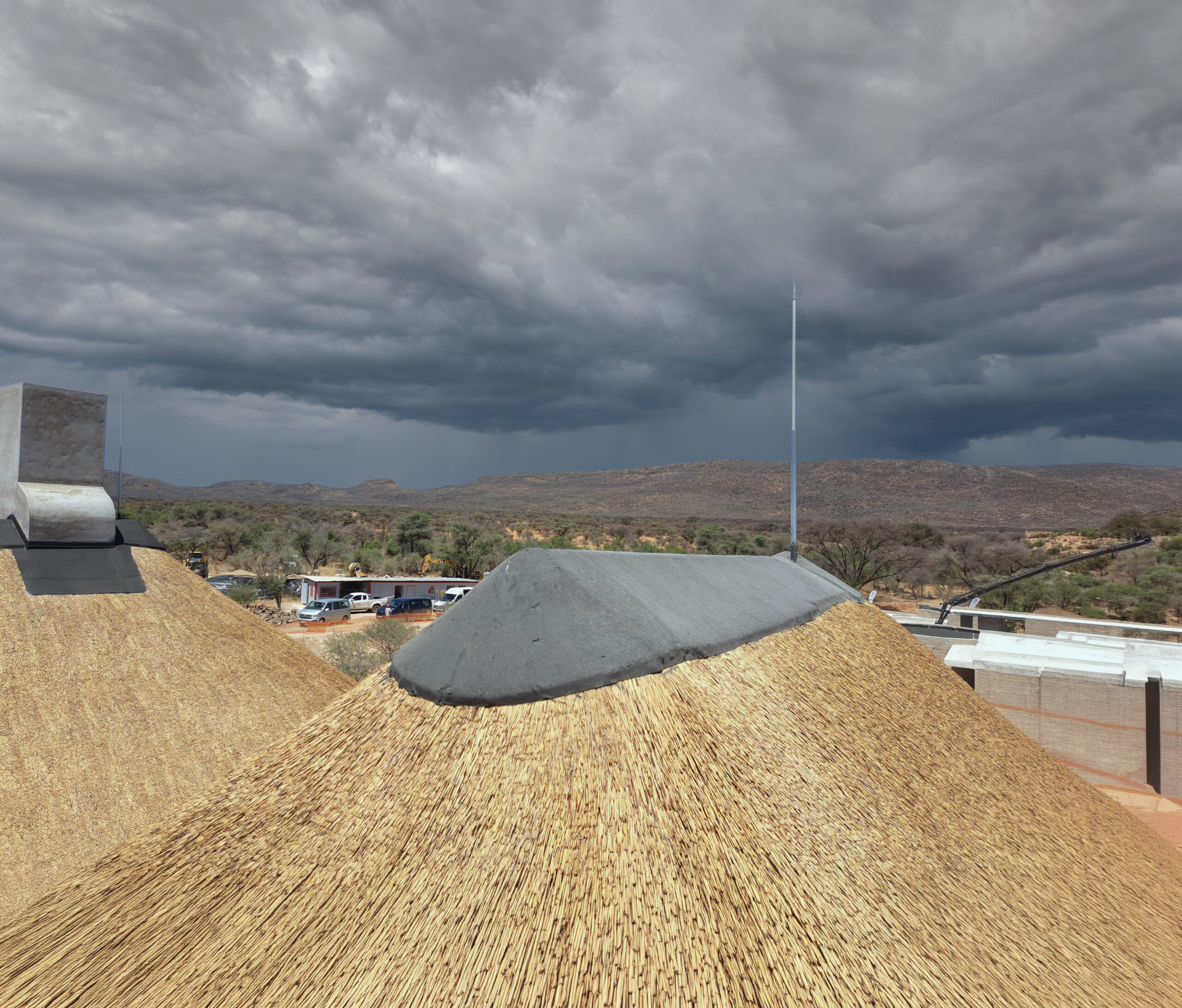
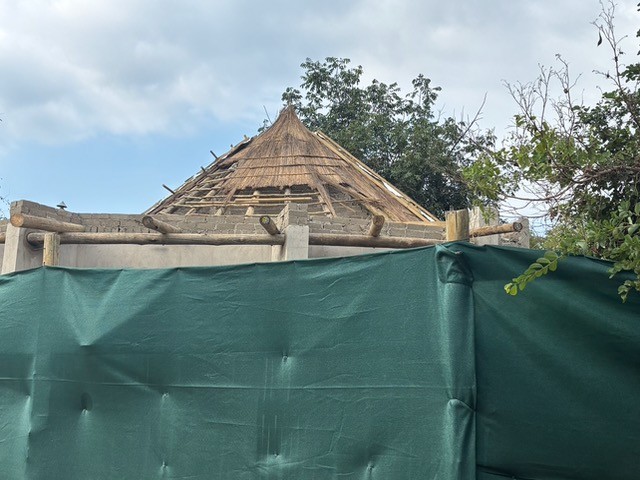
- Thatch roof structures — Thatch ignites almost instantly under a direct strike. Lightning protection for thatch buildings is not optional; it is a life-safety requirement under SANS 62305.
- Data centres— Even a near-miss can induce voltage surges that corrupt data and destroy servers. A direct strike without protection is unthinkable.
- Fuel and chemical storage depots — The secondary fire and explosion risk demands the highest protection levels, typically requiring free-standing mast arrays.
- Medical facilities and hospitals — Life-support equipment, surgical theatres, and diagnostic imaging systems cannot tolerate any interruption or surge event.
- Mining operations — Open-cast mines, processing plants, and explosives magazines in lightning-prone regions like the Northern Cape and Rustenburg belt need robust, corrosion-resistant mast systems.
- High-rise commercial buildings — The taller the structure, the greater its natural attraction to lightning. Masts on rooftops and parapets form a critical part of the building’s total protection envelope.
The Engineering Behind Placement: It Is Not Guesswork
Installing a mast is simple. Installing it in the right position, at the right height, with the right earthing system beneath it — that is engineering.
Under SANS 62305 (the South African adoption of the international IEC 62305 standard), two primary methods govern mast placement: the rolling sphere method and the protection angle method. Both answer the same question: given a mast of known height, what volume of space around it is protected against a direct strike?
The rolling sphere method imagines a sphere — typically 20, 30, 45, or 60 metres in radius, depending on the protection level required — rolling across the ground and over the building. Any point the sphere touches is vulnerable; any point it cannot reach is protected. This method accounts for the fact that lightning can strike the side of a tall structure, not just its top, and it is the most rigorous approach for complex geometries.
The protection angle method is simpler and suited to smaller, less complex structures. It defines a conical zone beneath the mast tip, within which protection is assured. The steeper the angle, the smaller the protected footprint — which is why taller masts protect broader areas.
What neither method can account for, however, is what happens once the current reaches the ground. This is where HHK’s approach diverges from that of a generalist contractor.
Why Soil Comes First — The HHK Difference
A lightning mast is only as effective as the earthing system beneath it. You can position the finest mast in the world with mathematical precision, but if the soil around its earth electrode cannot dissipate tens of thousands of amperes rapidly, the installation is compromised before the first storm arrives.
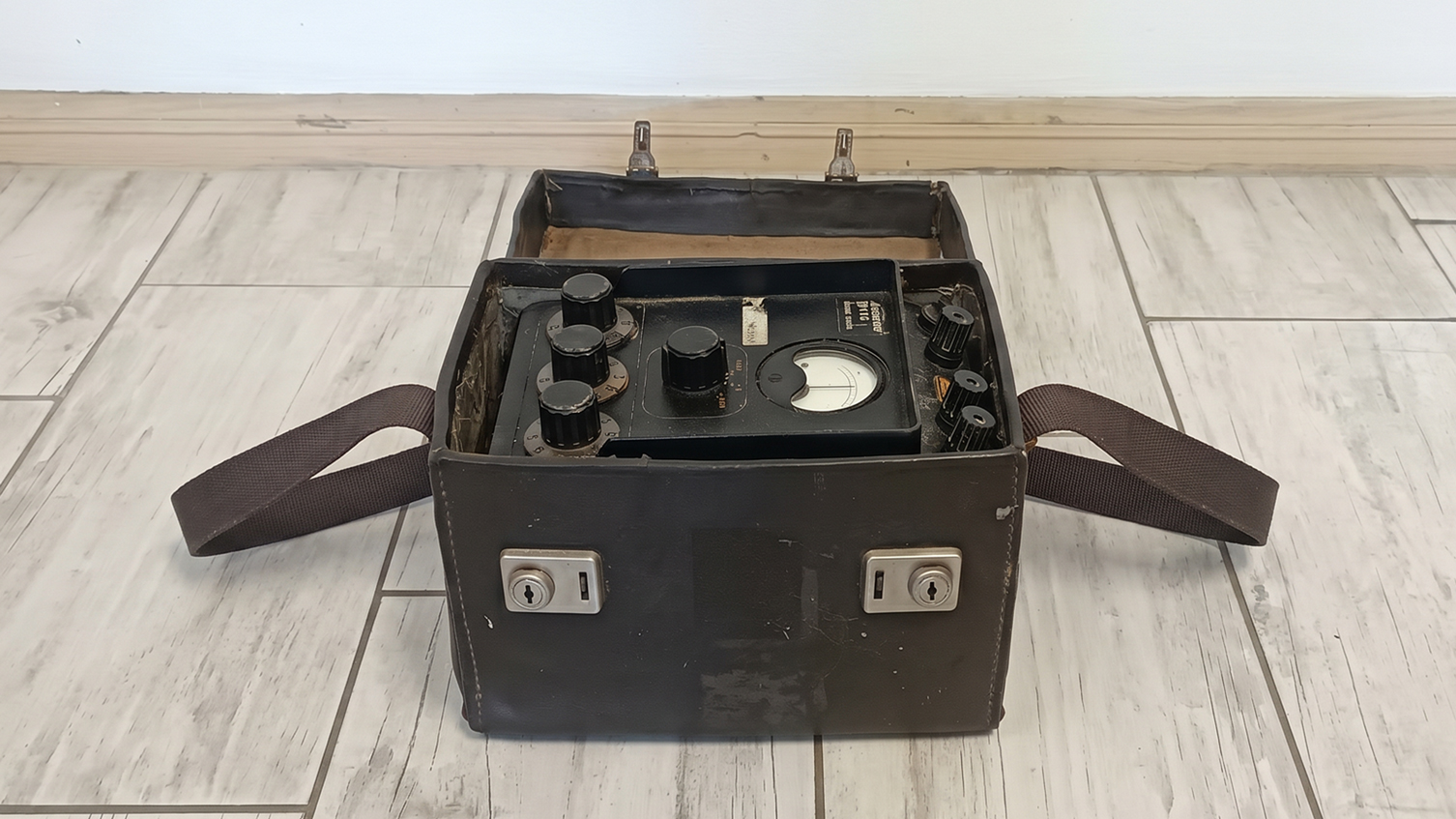
At HHK, every lightning mast installation begins with a soil resistivity survey. We measure the earth’s electrical resistance at your specific site, at multiple depths, using the Wenner four-pin method. This data directly informs the earthing design — electrode type, depth, configuration, and any necessary soil treatment (such as bentonite backfill or Marconite conductive concrete for high-resistivity sites like rocky terrain or dry sand).
This is what separates a compliance-grade installation from one that merely looks compliant on paper. A system that passes a visual inspection but fails under actual fault conditions is worse than no system at all — it creates a false sense of security.
Every HHK installation is custom-engineered to your building’s geometry, your soil’s characteristics, and your operational risk profile. We do not use off-the-shelf kits and hope they work. We design from first principles, install to the highest standards, test every connection, and issue a legally recognised Certificate of Compliance that stands up to insurer scrutiny and regulatory audit.
Built for Southern African Conditions
Southern Africa presents unique challenges that imported, one-size-fits-all solutions cannot address. Our lightning density — particularly across the Highveld, the Drakensberg escarpment, and northern KwaZulu-Natal — ranks among the highest in the world. Our coastal environments, from the Atlantic seaboard to the Indian Ocean littoral, subject metalwork to aggressive salt-laden corrosion. Our UV exposure degrades unprotected materials rapidly. And our soil conditions range from the conductive clays of Gauteng to the near-insulating granite of the Namibian shield.
HHK masts, conductors, clamps, and electrodes are specified and sourced to withstand these conditions for decades, not years. Hot-dip galvanised steel to SANS 121 standards, stainless steel grades matched to the specific corrosion environment, and UV-stabilised HVI conductor jackets are standard in our installations — not optional upgrades.
Do Not Wait for Lightning Season
The Southern African lightning season typically runs from October through April, peaking in the midsummer months when afternoon convection storms build with startling speed across the interior. Facilities that wait until the first storm warnings to address protection gaps are already too late. Engineering assessments, soil surveys, system design, procurement, and installation take time — and the cost of rushing is always borne in quality compromises.
The right time to assess your lightning protection is now, during the quieter winter months, when our engineering teams can survey your site unhurriedly and deliver a complete, turnkey solution before the first cumulonimbus clouds gather on the horizon.
Protect What You Have Built
Your facility represents years — perhaps decades — of investment. It houses your people, your equipment, your data, and your operations. A single lightning strike can undo all of it in milliseconds. But it does not have to. With an expertly engineered lightning mast system from Southern Africa’s largest and most experienced lightning protection specialist, you can face every storm season with absolute confidence.